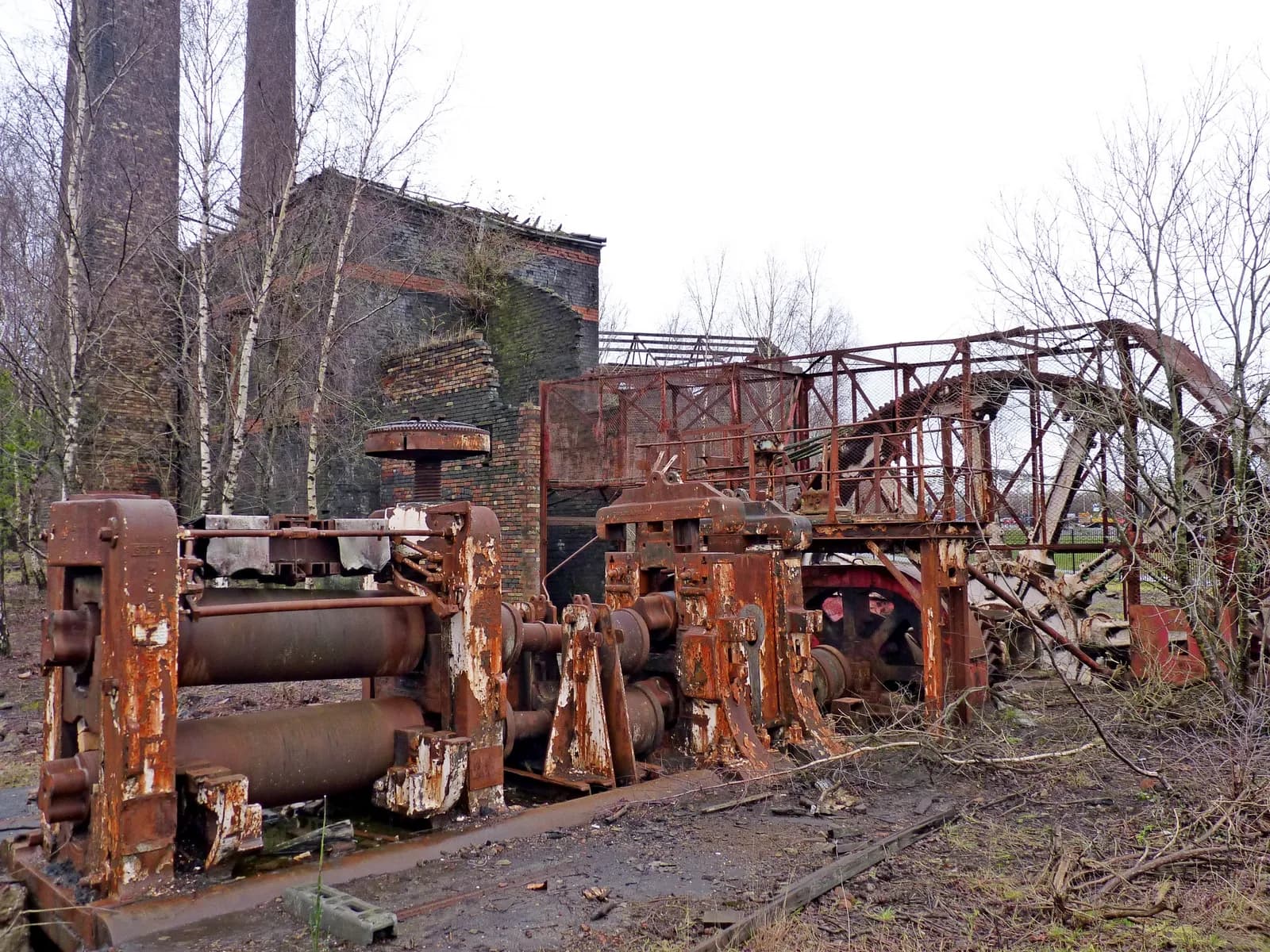
During the Industrial Revolution, Swansea earned the nickname "Copperopolis" by processing at times as much as 70 per cent of the world's copper. The industry shaped the city's landscape, its population, and its place in global trade for more than 150 years.
The Rise of the Lower Tawe Valley
The first copper smelter in Swansea was established in 1717. Works began appearing along the River Tawe from 1720 onwards, and by 1750 the district supplied half of Britain's copper needs. During the 19th century, the lower Tawe valley became a dense mass of industry as the city reached its peak as the world's leading copper-smelting area.
Why Swansea Dominated
Swansea's dominance rested on geography and geology. Local coal mines provided fuel for smelting, while a navigable river and port allowed ore to be brought in and finished metal shipped out. Nearby limestone supplied the flux required in the process, and trading links across the Bristol Channel connected the city with copper ore sources in Cornwall and Devon.
The Works That Built a City
The industry did not merely occupy Swansea; it created parts of it. Vivianstown, now known as Hafod, took its original name from Vivian and Sons, owners of the Hafod Copper Works. Morriston was founded around 1790 by the Morris family, owners of the Cambrian Works. The spread of works, housing, and infrastructure transformed the lower valley from open land into an industrial centre.
Ore, Steam, and an Unlikely Epidemic
Copper ore arrived from across the world, including cargoes from Cuba. In 1865, a shipment of Cuban ore landed in hot weather and brought an unexpected consequence: a yellow fever outbreak. Twenty-seven inhabitants were infected and fifteen died. It remains the only recorded outbreak of yellow fever on the British mainland.
Decline and Reclamation
The late 19th century brought increased foreign competition. The industry faced pressure from the decline of copper mining in Cornwall, falling copper prices, and the shift to lower-grade deposits in North and South America. Smelters gradually closed, leaving the Lower Swansea Valley filled with derelict works and waste. The Lower Swansea Valley Scheme, initiated after 1960, sought to reclaim the polluted land.
The Legacy Today
Swansea University maintains a research highlight titled "A World of Welsh Copper" as part of its Civic Mission, reflecting continued engagement with the city's industrial heritage. The physical traces of Copperopolis survive in place names, surviving engine houses, and the reclaimed landscape of the lower Tawe valley.